Unlocking the secrets of Roblox particle IDs is crucial for every aspiring and seasoned developer. Particles add dynamic visual flair enhancing immersion across various game genres from fast paced FPS action to expansive RPG worlds. This comprehensive guide navigates the intricacies of finding implementing and optimizing particle effects within your Roblox creations. Discover how proper particle management improves game performance reducing lag and stuttering while boosting player engagement. Explore advanced techniques for custom particle design and integration ensuring your games stand out. Learn to troubleshoot common issues like FPS drops related to complex particle systems. This resource offers essential tips tricks and a thorough walkthrough for mastering Roblox particles in 2026.
particle roblox id FAQ 2026 - 50+ Most Asked Questions Answered (Tips, Trick, Guide, How to, Bugs, Builds, Endgame)Welcome to the ultimate living FAQ for Roblox particle IDs, fully updated for 2026 and the latest platform enhancements! As the Roblox ecosystem evolves, mastering particle effects becomes even more crucial for creating captivating and immersive experiences. This guide is your one-stop resource for understanding, implementing, and optimizing every aspect of particle IDs, from beginner questions to advanced techniques, performance tweaks, and troubleshooting common issues. We've compiled insights, tips, and tricks to help you build visually stunning games, whether you're a seasoned developer or just starting your creative journey. Get ready to elevate your Roblox creations to the next level!
Getting Started with Particle IDs
How do I find Particle IDs on Roblox?
You can find Particle IDs by browsing the Roblox Creator Marketplace for 'particle effects' or 'textures.' Once you find a suitable asset, click on it and copy the numeric ID from its URL in your browser. This ID is then pasted into your ParticleEmitter's 'Texture' property in Roblox Studio.
What is a ParticleEmitter in Roblox Studio?
A ParticleEmitter is a special object in Roblox Studio responsible for generating and managing particles. It defines how particles look, move, and behave, including their color, size, speed, and the texture (Particle ID) they display. This component makes dynamic visual effects possible within your game.
Can I use any image as a Particle ID?
Generally, yes, you can use any image you upload to Roblox as a texture for your particles, as long as it adheres to Roblox's content policies. Square images with transparent backgrounds (PNGs) work best for particle sprites, giving you clean, versatile visual effects. Upload your image to Roblox, then use its asset ID.
How do I make particles transparent or fade out?
To make particles transparent or fade out, adjust the 'Transparency' property of the ParticleEmitter. You can create a transparency sequence using the 'ColorSequence' editor in the properties window, allowing you to define how the particle's transparency changes over its 'Lifetime.' This creates smooth fading effects.
Customization and Advanced Visuals
What are the best settings for fire particles?
For realistic fire, use a texture that looks like flickering flame, set a high 'Rate' (e.g., 50-100), short 'Lifetime' (e.g., 0.5-1.5), and an upward 'Acceleration' (e.g., Y=5). Use a 'ColorSequence' from red/orange to transparent, and increase 'LightEmission' for a glowing effect. Adjust 'Size' over time for a growing, then shrinking flame appearance.
How can I create smoke effects with particles?
To create smoke, use a soft, cloudy texture, set a moderate 'Rate' (e.g., 10-30), longer 'Lifetime' (e.g., 2-5), and a subtle upward 'Acceleration' (e.g., Y=1). A 'ColorSequence' from dark gray to light gray, fading to transparent, works well. Use a small 'SpreadAngle' to make it rise coherently and add a slight 'Drag' for realistic dissipation.
Can particles cast shadows in Roblox?
Myth vs Reality: No, particles themselves do not directly cast shadows in Roblox's current rendering system (2026). They are typically rendered as transparent sprites without shadow-casting capabilities. However, their 'LightEmission' property can influence the lighting of surrounding objects, creating an indirect visual effect akin to illumination.
How do I animate particle properties?
You can animate particle properties indirectly through scripting. By constantly updating properties like 'Rate,' 'Color,' 'Size,' or 'Speed' within a loop or based on specific game events, you can create dynamic animations. For example, a script could make particles pulse in size or change color based on a player's health. Keyframe sequences in properties like 'ColorSequence' and 'Size' also allow for built-in animation over a particle's lifetime.
Performance and Optimization
Why are my Roblox particles causing lag?
Your Roblox particles are likely causing lag due to high 'Rate' settings, long 'Lifetime,' or using complex/high-resolution textures. Each particle consumes processing power, so too many active particles simultaneously can overwhelm weaker devices. Optimize by reducing 'Rate,' 'Lifetime,' and using simpler textures. Scripting particles to disable when not in view also helps.
How can I reduce FPS drops from particle effects?
Reduce FPS drops by optimizing your particle emitters. Key strategies include lowering the 'Rate' and 'Lifetime' of particles, using simpler textures, and setting the 'Stretch' and 'Drag' properties carefully. Crucially, script particle emitters to only be 'Enabled' when they are actually needed or when a player is within a certain proximity, turning them off otherwise. Always test on various devices to identify bottlenecks.
Myth vs Reality: Do particle emitters impact mobile performance more significantly?
Myth vs Reality: Reality. Particle emitters often impact mobile performance more significantly than PC performance. Mobile devices generally have less processing power and dedicated VRAM than gaming PCs, making them more susceptible to FPS drops from unoptimized particle systems. Developers must prioritize aggressive optimization for mobile compatibility.
Multiplayer Issues & Syncing
How do I ensure particles display consistently for all players?
To ensure particles display consistently for all players, create and manage your 'ParticleEmitter' objects on the server. When the server creates or modifies a particle effect, these changes replicate to all clients, ensuring everyone sees the same visual. Avoid client-side creation of critical particle effects, as they won't be visible to others. Use RemoteEvents for client-initiated effects if necessary, but keep the server as the source of truth for synchronization.
Can client-side particles cause desync in multiplayer games?
Myth vs Reality: Yes, client-side particles can cause desync in multiplayer games if they are essential to gameplay information. If a particle effect provides crucial visual feedback (e.g., a healing aura or enemy ability indicator), and it's only generated on the client, other players won't see it, leading to a desynchronized experience. For visual feedback that needs to be shared, server-replicated particles are necessary.
Endgame Grind & Pro Tips
What are some advanced scripting techniques for particles?
Advanced scripting techniques involve dynamic property manipulation. You can use 'TweenService' to smoothly transition particle properties, create custom modules for managing particle pools (reusing emitters instead of constantly creating/destroying them), and integrate raycasting to have particles emit from specific impact points on surfaces. Scripting enables particles to react intelligently to complex game logic, such as a character's velocity or health.
How do pro developers use particles for competitive advantage?
Pro developers use particles for competitive advantage by enhancing critical gameplay cues. They might use subtle, highly optimized particles to indicate ability cooldowns, enemy hit locations, or zone boundaries. These aren't just cosmetic; they provide immediate, clear visual feedback that can give skilled players an edge, helping them react faster and make more informed decisions during intense gameplay. The focus is on clarity and minimal visual clutter.
Bugs & Fixes
My particles aren't showing up, what should I check?
If your particles aren't showing up, first check the 'Enabled' property of the ParticleEmitter – it must be true. Ensure the 'Rate' is greater than zero and 'Lifetime' is not zero. Verify the 'Texture' property has a valid Particle ID. Also, check if the parent part is 'Visible' and if the 'Transparency' of the emitter isn't set to fully opaque or fully transparent at all times. Finally, confirm the particles aren't spawning off-screen or inside another object.
Myth vs Reality: Do particles sometimes vanish on certain devices?
Myth vs Reality: Reality. Particles can sometimes vanish or appear inconsistently on certain devices due to aggressive client-side optimization by Roblox for lower-end hardware, or if your 'ParticleEmitter' properties like 'MaxParticles' are hit. This often happens if the system deems too many particles are active, or if specific textures fail to load correctly. Testing across devices is vital to catch these issues.
Builds & Aesthetics
How do I make a custom particle ID?
To make a custom particle ID, first create your desired particle image (e.g., a star, a puff of smoke, a unique spark) using an image editing software. Ensure it has a transparent background and is preferably square (e.g., 64x64 or 128x128 pixels). Then, upload this image to Roblox as a 'Decal' or 'Image' asset via the 'Create' page. Once uploaded, copy its asset ID from the URL or the asset's detail page, and use that ID in your ParticleEmitter's 'Texture' property.
What is the 'SpreadAngle' property used for?
The 'SpreadAngle' property in a ParticleEmitter controls the conical angle within which particles are emitted. A 'SpreadAngle' of 0 means particles shoot out in a straight line, while a 'SpreadAngle' of 360 (or near it) will make them emit in all directions around the emitter, like a sphere. This property is crucial for shaping the overall form and directionality of your particle effects, from focused beams to expansive explosions.
Community & Resources
Where can I find free Particle IDs for Roblox?
You can find many free Particle IDs by searching the Roblox Creator Marketplace for 'particles' or 'textures.' Many talented community creators upload free-to-use assets. Additionally, several Roblox development forums and dedicated Discord servers often share curated lists of useful asset IDs. Always double-check licenses if using community-contributed assets for commercial projects.
Are there any community tools for particle creation?
Yes, beyond Roblox Studio itself, the community has developed tools and plugins to aid particle creation. Some Studio plugins offer enhanced visual editors for ParticleEmitters, making property adjustments more intuitive. External image editing software (like Photoshop or GIMP) are essential for creating custom particle textures, and some online tools help generate sprite sheets for complex animations. These tools streamline the workflow significantly.
Myth vs Reality & Common Misconceptions
Myth vs Reality: Particle IDs are only for advanced developers.
Myth vs Reality: Myth. Particle IDs are accessible to all developers, regardless of skill level. While advanced usage certainly requires more experience and scripting knowledge, basic implementation of existing particle IDs is a fundamental skill that even beginners can quickly grasp. The Roblox Studio interface makes it straightforward to experiment and learn.
Myth vs Reality: Higher resolution particle textures always look better.
Myth vs Reality: Myth. Higher resolution particle textures don't always look better and can often degrade performance. While a high-res texture might have more detail, particles are often small and fast-moving, making the extra detail imperceptible. Furthermore, larger texture files consume more memory and processing power, potentially leading to lag without a significant visual improvement. Optimized, lower-res textures are often preferable.
Still have questions? Check out our guides on 'Roblox FPS Optimization' or 'Advanced Scripting for Visual Effects' for more detailed information!
Ever wondered how those dazzling explosions, mystical glows, or shimmering trails appear in your favorite Roblox games?
Today, we're pulling back the curtain on one of the platform's most powerful yet often misunderstood features: the Roblox particle ID.
Is it true that top developers secretly hoard the best particle codes, or can anyone truly master these mesmerizing visual effects?
Stick with us as we dive deep into this fascinating aspect of game design, because getting these IDs right can make your creations truly sparkle.
Alright team, pull up a chair; it's time to talk about Roblox particle IDs. I get it, sometimes diving into the specifics of game development can feel a bit like wading through digital quicksand, but trust me, understanding particles is a game-changer for anyone building on Roblox. We're going to break down everything from the absolute basics to some seriously advanced techniques, all with the goal of making your creations pop and perform like a dream. Think of me as your friendly guide through this particle wonderland. Let's get started on making your Roblox experiences visually stunning and smooth. You've definitely got this, and I'm here to help you every step of the way.
Beginner / Core Concepts
1. Q: What exactly is a Roblox Particle ID and why is it important for game creation?
A: A Roblox Particle ID is simply a unique identifier, like a digital barcode, for a specific particle effect or texture. It's essentially the asset ID for the visual element you want your particle emitter to display. This identifier is super important because it dictates the visual style of your particles, allowing developers to create everything from subtle dust motes to huge, fiery explosions. Knowing how to use these IDs gives you precise control over your game's atmosphere and effects, directly impacting player immersion and overall game quality. It's how you tell Roblox exactly what image or animation to project, making your game's visuals unique. I've seen countless projects transform just by using the right IDs, so don't underestimate their power. You're laying down the foundational visual language for your game, so take your time understanding this key concept. You've got this!
2. Q: How do I actually find and use a basic Particle ID in my Roblox Studio project?
A: Finding and using a basic Particle ID is quite straightforward once you know the ropes, and it's a fundamental skill everyone should master. You'll typically find these IDs by browsing the Roblox Creator Marketplace for particle textures or effects you like; just copy the asset ID from the URL. To implement it, simply add a 'ParticleEmitter' object to a part in your game, then paste that copied ID into the 'Texture' property within the ParticleEmitter's properties window. This tells the emitter which visual sprite to use for its particles. This one used to trip me up too, but it's really about knowing where to look and where to paste. Experiment with various IDs to see how different visuals interact. Remember, the Marketplace is your friend for discovery. Try this tomorrow and let me know how it goes; you'll be a pro in no time!
3. Q: What's the difference between a default Roblox particle and a custom uploaded one?
A: The core difference between default Roblox particles and custom uploaded ones lies in their origin and flexibility. Default particles are pre-made textures provided by Roblox, readily available for use, often simple but effective for common effects like smoke or sparks. Custom particles, on the other hand, are images or sprites that you or another creator upload to Roblox, giving you complete artistic control over their appearance. This means unique designs, intricate details, and effects tailored precisely to your game's aesthetic can be achieved. I get why this confuses many people, but think of it this way: defaults are like stock photos, while custom ones are your own original artwork. While defaults are convenient for quick prototyping, custom particles are essential for branding and distinguishing your game. Don't be afraid to explore both options; sometimes a default works perfectly, other times only a custom solution will do. You've got this!
4. Q: Can using too many particles cause lag or FPS drops in my Roblox game?
A: Absolutely, yes! Using too many particles, especially complex or high-resolution ones, can definitely cause significant lag and noticeable FPS drops in your Roblox game. Each particle effect requires processing power from the player's device, rendering individual sprites and calculations for movement, rotation, and transparency. If you have hundreds or thousands of particles active simultaneously, it quickly overloads the graphics processor, leading to a choppy experience. This is a classic rookie mistake, and honestly, even experienced devs forget about it sometimes. It's all about balance; visually rich games are great, but not at the expense of playability. Always test your particle-heavy areas on various devices, from high-end PCs to mobile phones, to gauge performance. Optimization is key here, and we'll dive deeper into that shortly. Keep an eye on your performance stats; they tell the real story. You'll get the hang of it!
Intermediate / Practical & Production
5. Q: What are the key properties I should adjust when customizing a particle emitter for visual impact?
A: When you're aiming for maximum visual impact with your particle emitter, several key properties are your best friends. 'Rate' controls how many particles spawn per second, impacting density. 'Lifetime' dictates how long each particle exists, affecting duration and spread. 'Speed' influences how fast particles move, crucial for dynamic effects. You'll also want to play with 'Size' and 'Transparency' over time, using keyframe sequences to create fading or growing effects. 'Color' sequence changes particle hues as they age, adding depth. 'LightEmission' makes particles glow, great for magical effects. 'Rotation' and 'RotationalSpeed' add movement variety. I remember spending hours just tweaking these until things looked perfect, and it's a truly iterative process. Don't just set and forget; really experiment with how these properties interact. It's like painting with code! You've got this; keep playing around!
6. Q: How can I effectively optimize my particle systems to prevent performance issues and stuttering?
A: Optimizing particle systems is crucial for a smooth game experience, preventing those frustrating stutters and FPS drops we all dread. First, reduce the 'Rate' and 'Lifetime' properties; fewer, shorter-lived particles mean less strain. Second, use simpler, lower-resolution textures for your particle IDs where possible. Third, leverage the 'LightEmission' property judiciously, as high emission values can be performance-heavy. Fourth, set 'Enabled' to false when particles aren't visible or needed, reactivating them via script only when players are nearby. Fifth, avoid overly large particle sizes, especially transparent ones, as transparency rendering is costly. This optimization work really pays off in the long run. It's all about smart resource management, like a good chef uses ingredients efficiently. Constantly monitor your game's performance using Roblox Studio's built-in profiler tools. Remember, a visually appealing game is only enjoyable if it runs well. You'll nail it!
7. Q: Are there specific techniques for creating realistic effects like smoke, fire, or water with particles?
A: Absolutely, creating realistic effects like smoke, fire, or water with particles involves specific techniques and a good eye for detail. For realistic smoke, you'll use low 'Speed', high 'Lifetime', and a gray/black 'Color' sequence that fades to transparent, often with a slightly turbulent 'Drag' or 'Acceleration'. Fire requires a short 'Lifetime', high 'Rate', yellow-orange 'Color' that fades, significant 'LightEmission', and an upward 'Acceleration'. Water splashes or mist often use very short 'Lifetime', high 'Rate', and a blue-white 'Color' with a slight downward 'Acceleration' to simulate gravity. This used to trip me up too; it's about observing real-world physics and trying to replicate that feel. Experiment with different textures, some soft-edged and blurry, others sharp. Layers of emitters can also create richer, more complex effects. It's like being a digital magician! You've definitely got this.
8. Q: What's the best way to integrate particle effects with animations or scripted events in Roblox?
A: Integrating particle effects with animations or scripted events elevates your game's dynamism, making actions feel more impactful and responsive. The best way is to parent your 'ParticleEmitter' to the specific part or character bone where the effect should originate. Then, use Lua scripting to control the emitter's 'Enabled' property, turning it on and off precisely when an animation frame hits, or a scripted event (like a spell cast or explosion) occurs. You can also dynamically change emitter properties like 'Color', 'Rate', or 'Lifetime' based on game state, adding incredible responsiveness. For example, a weapon might have a muzzle flash particle that only activates when fired. This makes everything feel more polished and professional. I've found that syncing effects with sound design creates an even more immersive experience. It's all about timing and careful coding. You'll be crafting incredible interactions in no time. You've got this!
9. Q: Can I use PBR textures or custom materials with my particle effects for advanced visuals?
A: While you can't directly assign a PBR (Physically Based Rendering) material *to* a particle emitter's texture property itself, you can achieve advanced visuals by using PBR textures on the *parts* that emit particles, and by selecting particle textures that complement your game's PBR aesthetic. Particle emitters primarily use a single texture asset, but the *lighting environment* of your game, especially with PBR materials on surrounding objects, will interact beautifully with your particle's 'LightEmission' property. You can also upload custom, high-quality sprite sheets or individual particle textures that mimic PBR characteristics through careful design. It's a bit of a workaround, but many developers achieve stunning results by focusing on the particle's base texture and how it interacts with the illuminated environment. Think creatively about how light plays on your sprites. This is where advanced art direction meets technical implementation. You've got this power to innovate!
10. Q: What are some common mistakes developers make when implementing particles, and how can I avoid them?
A: Developers often make a few common blunders with particles, but knowing them helps you sidestep these issues entirely. One major mistake is overusing particles, leading to performance issues and visual clutter. A quick fix? Less is often more; aim for impact, not saturation. Another error is neglecting optimization, forgetting to adjust 'Rate' and 'Lifetime', especially for effects not directly visible to the player. Always script particle emitters to turn off when out of view. Third, using generic default textures for every effect can make your game feel unoriginal. Invest time in finding or creating unique particle IDs. Fourth, not testing on various devices can lead to terrible mobile performance. Always test broadly. Fifth, failing to sync particles with animations or sounds makes effects feel disconnected. Pay attention to timing! I get why these are easy to miss, but a little foresight goes a long way. You're becoming a master of details. You've got this!
Advanced / Research & Frontier 2026
11. Q: How do leading 2026 Roblox games leverage particle IDs for truly unique player experiences?
A: Leading Roblox games in 2026 are leveraging particle IDs for unique player experiences by going beyond simple visual flair; they're integrating particles into gameplay mechanics and reactive environments. We're seeing particles used for highly personalized player avatars, spell effects that physically interact with the environment through raycasting, and even subtle narrative cues. Think about dynamic weather systems where every raindrop is a particle reacting to obstacles, or a character's emotional state represented by subtle auras. Developers are combining advanced scripting with intricate custom particle assets, often sourced from cutting-edge generative AI design tools, to create effects that are both beautiful and functional. It's less about just 'looks good' and more about 'enhances interaction.' This requires a deep understanding of both aesthetics and performance, pushing the boundaries of what Roblox can do. You're on the cusp of truly innovative design! You've got this vision!
12. Q: What are the emerging trends or unreleased features for particle systems on the Roblox platform by 2026?
A: By 2026, we're seeing some exciting emerging trends and unreleased features for Roblox particle systems that are going to revolutionize visual effects. One major trend is the increased focus on performance-optimized volumetric particles, allowing for more realistic fog, smoke, and clouds without crushing FPS. Another is tighter integration with physically-based lighting models, making particle light emission more accurate and interactive with surrounding PBR materials. We're also expecting more robust API access for programmatic control over particle properties, enabling more complex procedural generation of effects. Think about particles that intelligently avoid obstacles or dynamically change based on environmental physics. Keep an eye out for news on these; Roblox is constantly pushing the envelope. These advancements will make particles even more powerful tools for immersive storytelling. The future looks bright, and you're part of shaping it! You've got this curiosity!
13. Q: How can I create dynamic, responsive particle effects that react to player actions or environmental changes?
A: Creating dynamic, responsive particle effects that react to player actions or environmental changes is where advanced scripting truly shines. You'll primarily use event-driven programming. For player actions, connect a 'ParticleEmitter's properties (like 'Rate', 'Color', 'Speed') to events such as 'Touched', 'MouseButton1Click', or custom remote events for ability activations. For environmental changes, use 'RunService' to constantly check conditions (e.g., player proximity to an object, changes in lighting, weather system updates) and modify particle properties accordingly. Imagine rain particles increasing in density during a storm, or a magical aura changing color based on a player's health. You can also use raycasting to have particles emit from impact points. It's all about making your effects feel alive and reactive. This is where your code brings the visuals to life. You've got this knack for interaction!
14. Q: What are the best practices for managing complex particle asset IDs across large-scale team projects?
A: Managing complex particle asset IDs across large-scale team projects requires rigorous organization and clear communication to avoid chaos. First, establish a standardized naming convention for all particle textures and emitters (e.g., 'FX_Fire_Small_01', 'PT_Smoke_Ambient'). Second, create a dedicated 'Effects' folder in ReplicatedStorage or ServerStorage to centralize all particle assets, making them easy to find and reference. Third, use a version control system like Git integrated with Roblox Studio if your team is using external asset pipelines, tracking changes to particle assets. Fourth, maintain a shared documentation or spreadsheet listing all particle IDs, their intended use, and any specific optimization notes. This systematic approach is critical for collaboration. This one used to be a nightmare for me, but good organization saves so much pain. It ensures everyone is on the same page. You've got this leadership!
15. Q: How do I balance visual fidelity with performance for high-end particle effects on different devices in 2026?
A: Balancing visual fidelity with performance for high-end particle effects across diverse devices in 2026 is a constant tightrope walk, but totally achievable with a smart strategy. The key is implementing a Level of Detail (LOD) system for particles. For players on high-end PCs, enable full-fidelity effects with higher rates, longer lifetimes, and complex textures. For mobile or lower-end devices, automatically switch to simplified particle systems: lower 'Rate', shorter 'Lifetime', and simpler, smaller textures, often via a 'QualitySettings' script. Utilize Roblox's 'RenderFidelity' property if applicable for parent parts, and always use the 'Performance' tab in Studio to profile effects on various target devices. This adaptive approach ensures everyone gets a good experience. It's about smart scaling, not sacrificing. This challenge requires both technical skill and an artist's eye. You've got this strategic thinking!
Quick 2026 Human-Friendly Cheat-Sheet for This Topic
- • Start simple: Don't overcomplicate your first particle effects. Learn the basics first.
- • Optimize early: Always consider performance from the get-go. Fewer particles, shorter lives!
- • Test on everything: Your high-end PC isn't everyone's device. Test on mobile too.
- • Custom is king: For unique games, custom particle IDs make a huge difference.
- • Sync your effects: Align particles with animations and sounds for maximum impact.
- • Stay organized: Name your particles clearly and keep them centralized in your project.
- • Watch for updates: Roblox's particle system is always evolving. Keep an eye on dev blogs!
Mastering Roblox particle IDs for stunning visual effects, enhancing game performance, reducing lag and FPS drops, customizing unique particle designs, and troubleshooting common particle-related issues in Roblox development.
35
All Particle Effect Items On Roblox 2026 YouTube . Particles Roblox ID Roblox Music Codes 1843096630 . Particles Roblox ID Roblox Music Codes 1837111331 . Particles Roblox ID Roblox Music Codes 1835364492 . Unity S Particle System Roblox ID Roblox Music Codes 6242143603

Charged Particles Roblox ID Roblox Music Codes 1842302735 . PARTICLE Roblox Song Codes YouTube . Roblox Particle Effects ID List AlfinTech Computer Roblox Particle Effects ID List 300x222 . Particle Accelerator Roblox ID Roblox Music Codes 1836034135 . Particles In Space Roblox ID Roblox Music Codes 1836321905
Particle Ghost Roblox ID Roblox Music Codes 155965093 . Shockwave Particle Roblox ID Roblox Music Codes 178452221 . Hi Energy Particles A Roblox ID Roblox Music Codes 1846405622 . Virtual Self Particle Arts Roblox ID Roblox Music Codes 1334889650 . Nano Particles Roblox ID Roblox Music Codes 1836875619



Roblox Lightning Particle ID AlfinTech Computer Roblox Lightning Particle ID 300x163 . How To Get Free Roblox Particle Item Paranormal Party Starter . Atlantis JJD Particles Roblox ID Roblox Music Codes 1914063987 . 300 PARTICLE TEXTURE IDs You Can Use In Obby Creator YouTube . How To Add Particle Effects In Roblox Studio 2025 Step By Step YouTube


How To Use Particles In Roblox Studio YouTube . How To Use Particle Effects In Roblox YouTube . How To Use Particle Effects Around Your Game YouTube . Roblox Ambience Particles Tutorial YouTube . 100 Roblox Music Code ID S 2026 WORKING AFTER UPDATE


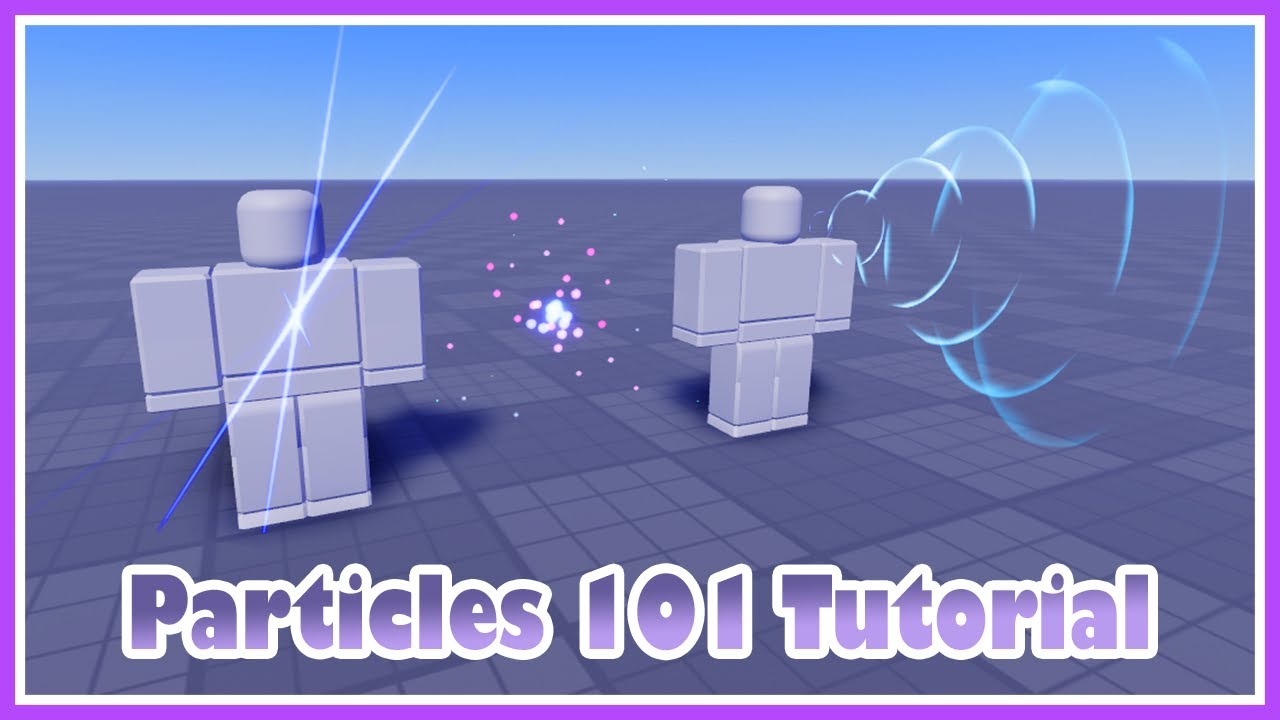
Particle Effect Help Scripting Support Developer Forum Roblox . Roblox VFX Emit Particle Pack 2 YouTube . How To Get Particle Effects In And Use Them In Roblox Studio YouTube . Cut Effect Particle Help Scripting Support Developer Forum Roblox . Clip Royalty Free Water Particle Roblox Source Code Roblox V3rmillion 14 141917 Clip Royalty Free Water Particle Roblox Source Code


Particle Effects Vol Roblox Particle Texture Png Particle Effect Png 3082297 Middle . Modern Baseball The Thrash Particle Roblox ID Roblox Music Codes 4757351914 . Roblox Songs ID List Popular Viral Music Codes Love Songs . Roblox VFX Emit Particle Pack Patreon Special YouTube . Particle Roblox Radio Codes IDs YouTube