Ever wondered how to bring your wildest imagination to life within Roblox? This comprehensive guide on how to make your own world on Roblox is your ultimate starting point. We're diving deep into Roblox Studio, the powerful and free creation tool that empowers millions of aspiring game developers. You'll learn the fundamental steps from conceptualizing your game idea to publishing it for the world to explore. Discover how to navigate the interface, build stunning environments, script interactive elements, and even engage a growing community of players. Whether you're a complete beginner or looking to refine your skills, this resource provides actionable insights, essential tips, and practical strategies to transform your creative vision into a thriving Roblox experience. Get ready to embark on an incredible journey of game development and share your unique world with the vast Roblox universe, attracting players and potentially even monetizing your creations. Let's make your dream game a reality today, leveraging Roblox's incredible platform and tools.
Welcome to the ultimate living FAQ for making your own world on Roblox, meticulously updated for the latest patches and features! Whether you're a curious beginner just starting your journey or an experienced developer looking for advanced tips, this resource is designed to answer your most pressing questions. We’ve scoured forums, community discussions, and official documentation to bring you concise, actionable insights that truly matter. From understanding the basics of Roblox Studio to tackling complex scripting challenges, this guide covers every aspect of game creation. We’ll help you navigate potential bugs, master creative builds, and discover smart strategies for endgame design, ensuring your Roblox world stands out. Get ready to transform your ideas into incredible interactive experiences, backed by the best community-driven knowledge and expert advice available.
How do I start making a game on Roblox?
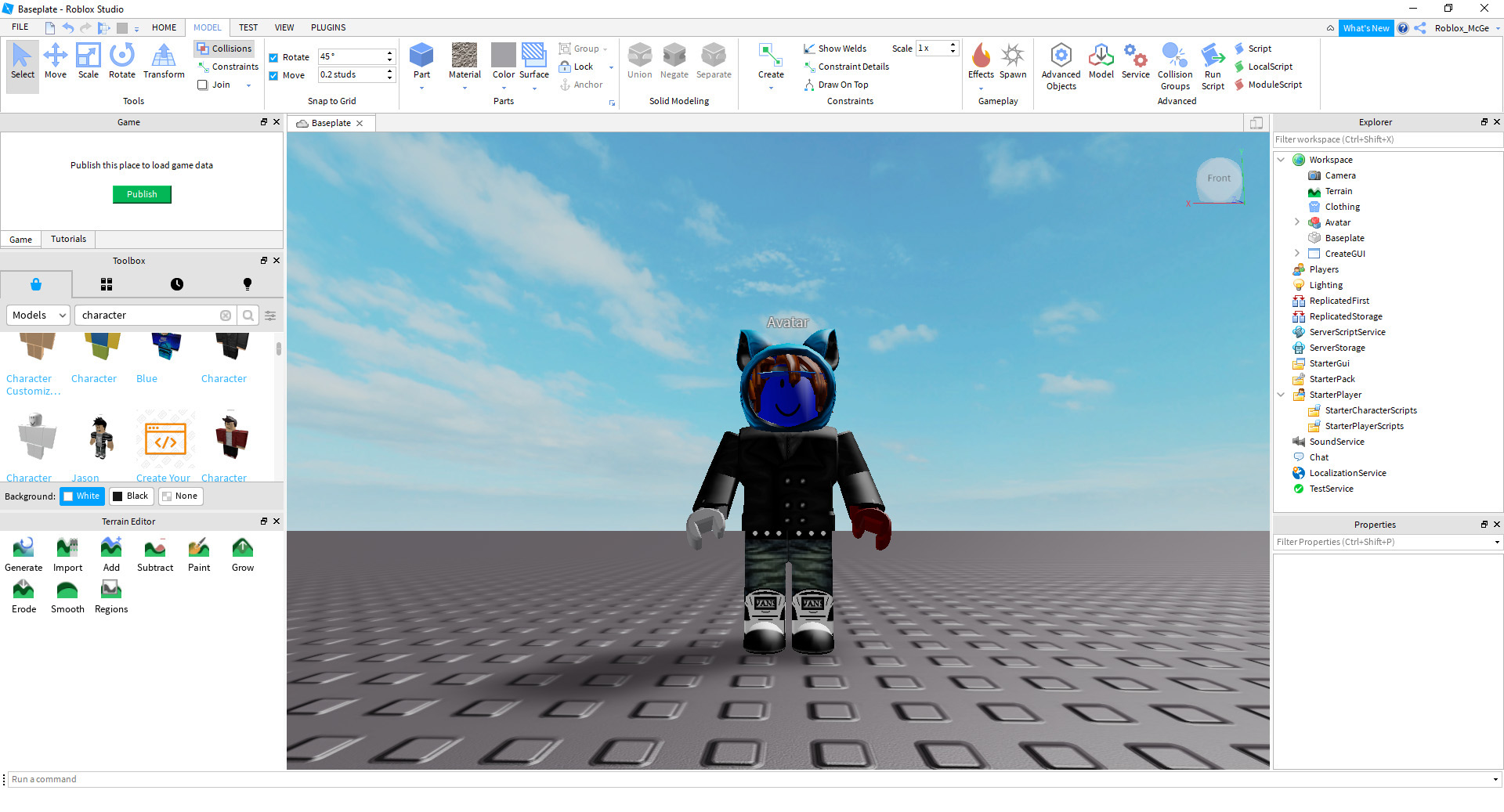
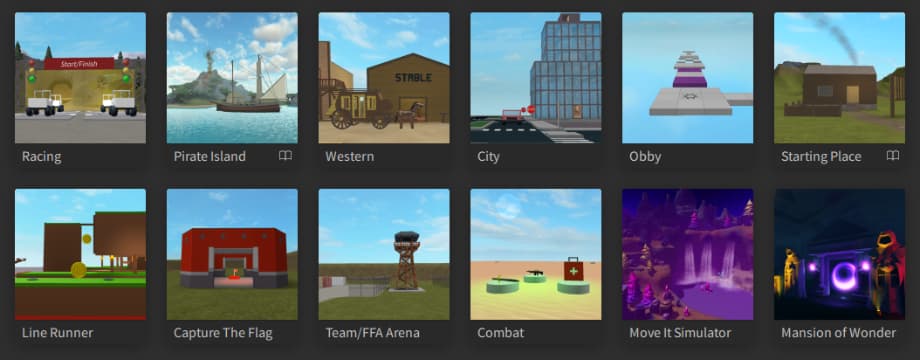
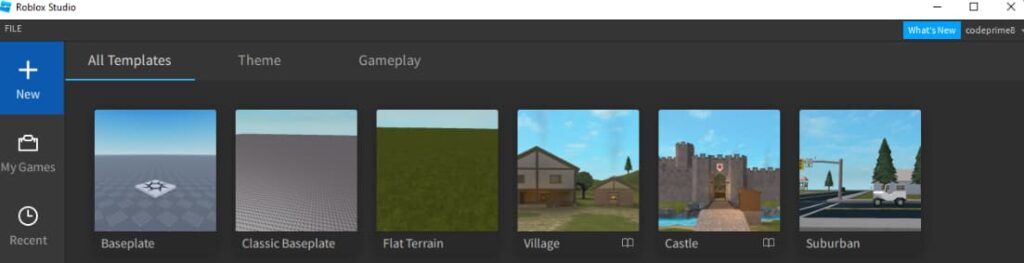
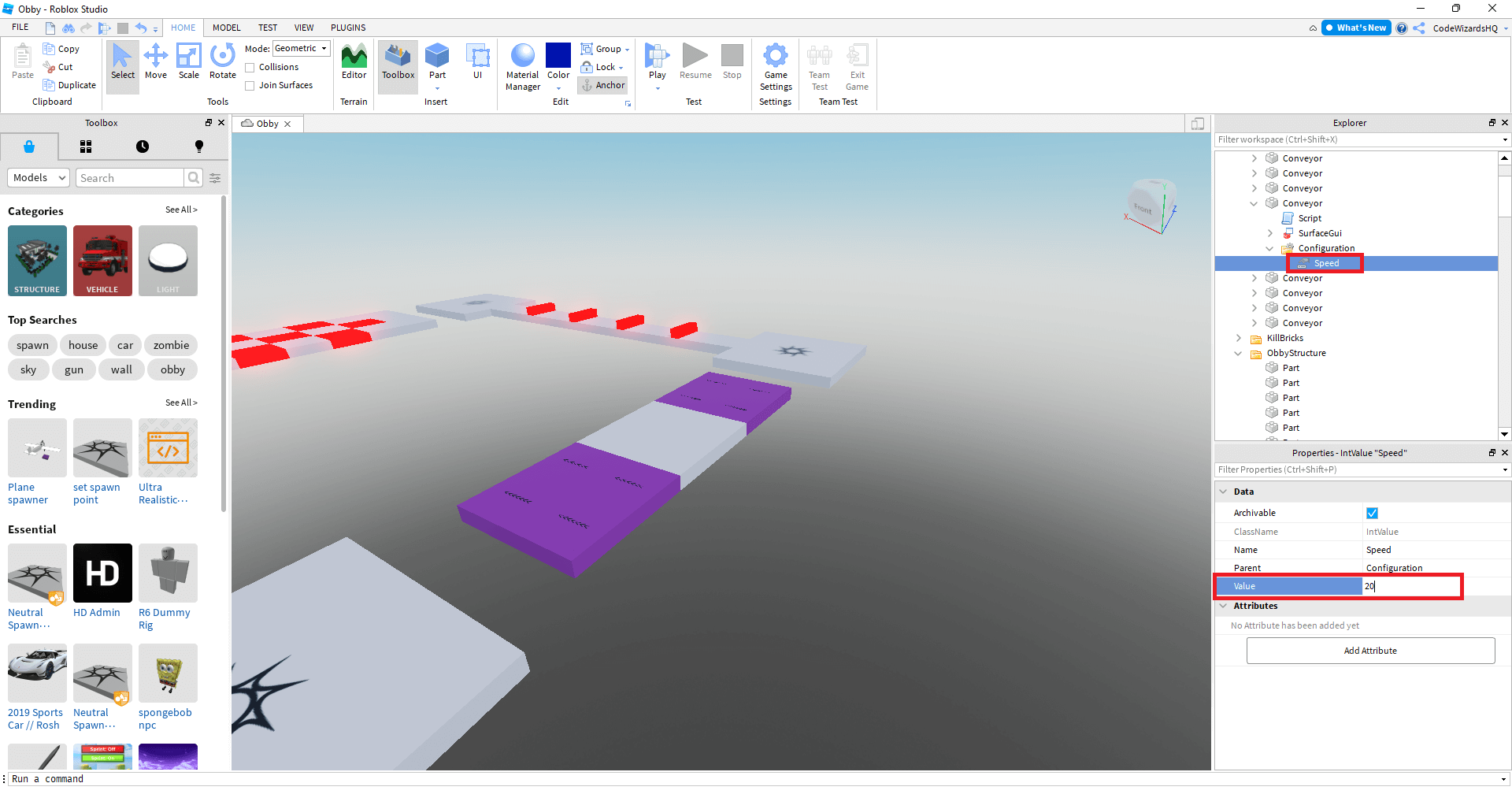
To begin creating a game on Roblox, first download and install Roblox Studio from the official Roblox website. Once installed, launch the application and choose a baseplate or template to start. The Studio interface offers tools for building, scripting, and publishing. Familiarize yourself with the Explorer and Properties windows; they are essential for manipulating objects and their attributes within your new world. It's quite intuitive once you begin experimenting.
What is Roblox Studio and how does it work for creators?
Roblox Studio is the free, integrated development environment (IDE) provided by Roblox, designed for creating experiences on the platform. It functions as a comprehensive toolkit where creators build environments with parts and models, write Lua scripts for interactivity, design user interfaces, and publish their games. It works by allowing users to manipulate 3D objects, apply physics, and program game logic directly.
Can I really make money by creating games on Roblox?
Yes, you can absolutely make money by creating games on Roblox. The platform allows developers to monetize their creations through Game Passes (one-time purchases), Developer Products (consumable items), and Premium Payouts (Robux earned based on Premium subscriber engagement). Successful games with high player engagement and thoughtful monetization strategies can generate substantial Robux, which can then be cashed out.
What programming language does Roblox use for game development?
Roblox primarily uses Lua, a lightweight, multi-paradigm programming language, for game development. Developers write scripts in Lua to add interactivity, define game rules, create UI elements, and manage game logic. Roblox Studio provides a built-in script editor, and the platform has extensive documentation and community resources for learning Lua specifically within the Roblox context.
How do I publish my first game on Roblox for others to play?
To publish your first game on Roblox, open your project in Roblox Studio and go to File > Publish to Roblox As... Choose to create a new game or update an existing one, then provide a title and description. After publishing, navigate to your game's page on the Roblox website, go to its settings, and ensure its privacy is set to 'Public' so other players can find and enjoy your creation.
What are the most common mistakes new Roblox creators make?
New Roblox creators often make mistakes such as not optimizing their game, leading to lag, ignoring community feedback, using too many free models without understanding them, neglecting basic scripting for interactivity, and overlooking mobile compatibility. They might also rush monetization without focusing on core gameplay or fail to regularly update and maintain their experience.
How can I ensure my Roblox game is fair and fun for players?
To ensure fairness and fun in your Roblox game, focus on balanced gameplay mechanics, clear objectives, and intuitive controls. Avoid 'pay-to-win' monetization models that disadvantage non-spending players. Listen to player feedback, iterate on your design, and implement anti-cheat measures. Regularly test your game with different player types to identify and address any frustrations or imbalances promptly.
Beginner Questions
How do I navigate Roblox Studio's interface effectively?
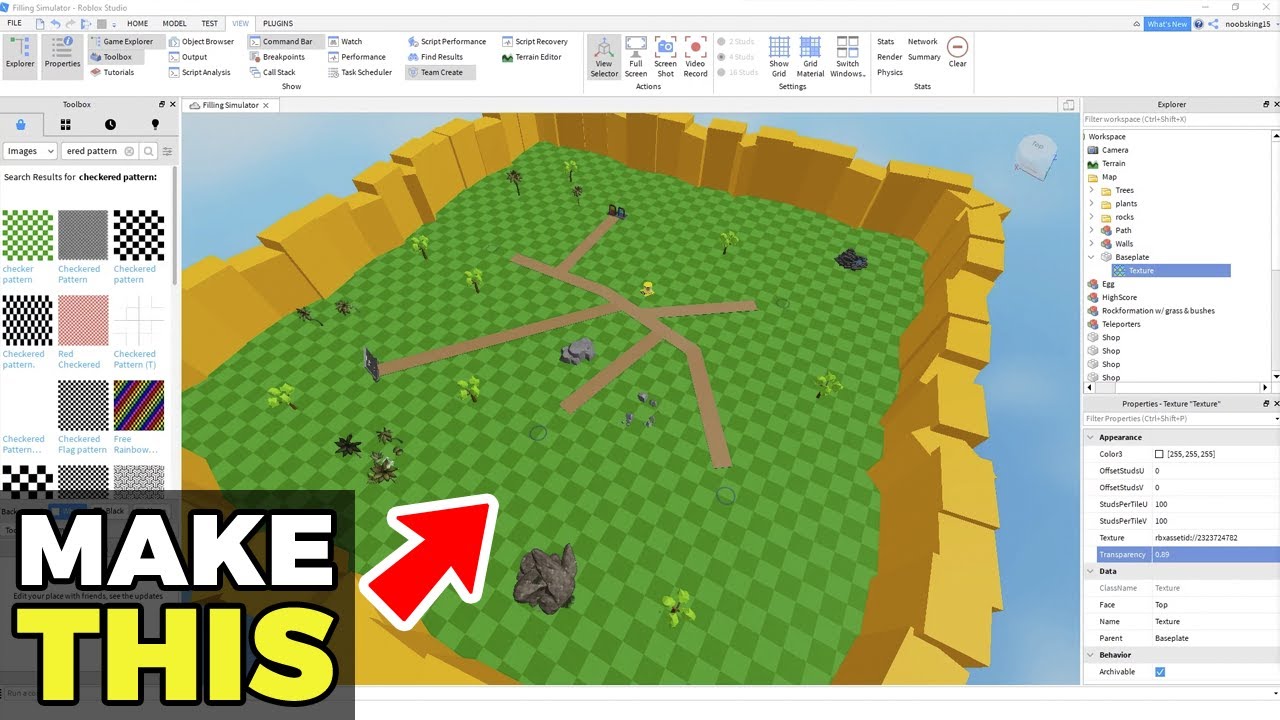
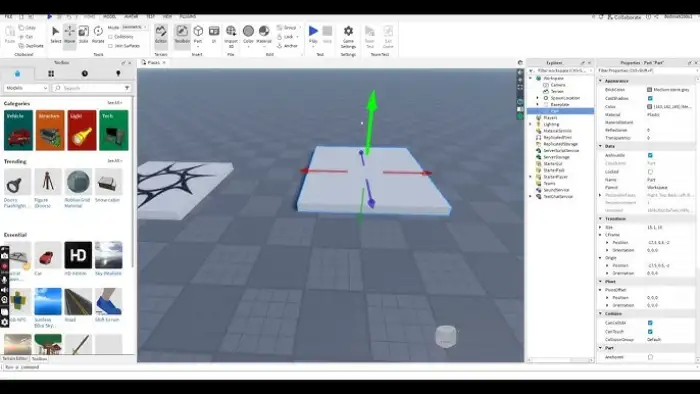
Navigating Roblox Studio effectively means mastering the Explorer, Properties, Toolbox, and Output windows. The Explorer shows your game's hierarchy, Properties lets you adjust object attributes, the Toolbox provides free assets, and the Output displays script errors. Use the camera controls (right-click and WASD) to move around the 3D space, and the Move, Scale, and Rotate tools to manipulate parts. Practice makes perfect in finding your way around.
What's the easiest way to add basic shapes and objects to my world?
The easiest way to add basic shapes is by clicking the 'Part' button in the Home tab, which inserts a block. You can then use the 'Move,' 'Scale,' and 'Rotate' tools to shape it into walls, floors, or simple props. For more complex objects, the 'Toolbox' offers a vast library of free models uploaded by other creators. Don't be afraid to use these initially to build your scenes faster.
Tips & Tricks
What are some quick tips for improving my game's performance?
For quick performance improvements, keep your part count low by using fewer, larger parts or leveraging meshes. Enable 'StreamingEnabled' in Workspace properties to load parts dynamically. Optimize scripts by avoiding inefficient loops and reducing unnecessary client-server communication. Also, limit complex lighting effects and excessive particle emitters; they can be resource-intensive, especially on older devices. Regular testing with the Developer Console helps pinpoint lag sources quickly.
How can I make my game visually appealing without being a 3D artist?
You can make your game visually appealing without being a 3D artist by focusing on coherent aesthetics. Utilize Roblox Studio’s built-in materials, colors, and lighting settings to create atmosphere. Experiment with different skyboxes and environmental effects like fog. The 'Toolbox' is a treasure trove of high-quality free models and textures. Consider a consistent color palette and simple, clean designs. A well-placed particle effect or sound can add significant polish without requiring complex art skills.
Builds & Classes
How can I create custom character classes or abilities in my game?
Creating custom character classes or abilities typically involves scripting. You'd use a server script to define the class properties (e.g., stats, special moves) and a local script to handle the player's UI and input for activating abilities. Data stores can save a player's chosen class. For unique abilities, you might manipulate the player's character model, use particle effects, or trigger animations. Module scripts are excellent for organizing your class definitions, making them reusable and manageable.
Endgame Grind
How do I design an engaging endgame for my Roblox experience?
Designing an engaging endgame involves providing players with long-term goals beyond the main progression. This could include challenging quests, competitive leaderboards, rare collectible items, prestige systems, or player-versus-player modes. Introduce new mechanics or areas accessible only after significant playtime. Offer cosmetic rewards or unique titles for dedicated players. Regularly update your game with fresh content to keep the endgame feeling dynamic and rewarding, giving players a reason to keep coming back.
Bugs & Fixes
What's the best approach to find and fix bugs in my scripts?
The best approach to find and fix bugs is a systematic one. First, always check the 'Output' window for error messages; they often tell you exactly where the problem is. Use 'print()' statements strategically in your scripts to track variable values and see if your code is executing as expected. The 'Debugger' (View > Debugger) allows you to set 'breakpoints' to pause script execution and inspect the state of your variables line by line. Test small sections of code independently. Isolate the problem by commenting out parts of your script until the bug disappears, then re-introduce code gradually. Ask for help from the Roblox developer community; often, someone else has encountered a similar issue.
Still have questions?
Don't stop creating! Explore these popular related guides: 'Roblox Scripting for Beginners,' 'Mastering Roblox Studio Building Tools,' and 'Monetization Strategies for Your Roblox Game.'
Making your own world on Roblox is an exciting journey of creativity and technical skill, allowing you to build virtually anything you can imagine and share it with a global audience. It's truly a platform where your ideas can come to life, from simple games to complex simulations. You start with Roblox Studio, a free and powerful tool that provides all the functionalities for design, building, and scripting. Learning the basics involves understanding the interface, manipulating parts, and grasping fundamental Lua scripting for interactivity. As you progress, you'll delve into more intricate game mechanics, optimize for performance, and even explore monetization to earn Robux from your creations.
The beauty of Roblox lies in its accessibility and the vast community support available. You don't need to be an expert coder or a professional designer from day one; there are countless tutorials, free assets, and fellow developers ready to help. Regular updates to Roblox Studio mean that the tools are constantly improving, offering new ways to enhance your game's visuals and functionality. Testing and feedback are crucial steps, ensuring your game is fun, fair, and bug-free for players across all devices.
Ultimately, creating your own Roblox world is about bringing a unique vision to life and seeing others enjoy it. It's a blend of artistry and problem-solving, where every challenge overcome adds to your skill set. The ability to iterate, get feedback, and continuously refine your game makes the process incredibly rewarding. So, jump in, experiment, and let your imagination be your guide; the next viral Roblox experience could very well be yours!
Ever wonder how all those amazing Roblox experiences get made? You know, the ones that have millions of players jumping in daily, creating their own adventures and pushing the boundaries of what's possible on the platform? It’s a super common question, and honestly, it’s not as daunting as it might seem to get started. Many folks are curious about **how to make your own world on Roblox**, and the exciting news is that the tools are right at your fingertips. Roblox isn’t just a game; it's a massive creation engine where imagination truly runs wild. This year, with constant updates to Roblox Studio, building your dream game has never been more accessible or feature-rich. You can literally craft entire universes, from challenging obstacle courses to intricate role-playing games, all from your computer.
We're talking about a platform that empowers creators of all ages, allowing you to design, build, and share your unique visions with a global audience. The journey from a blank canvas to a bustling virtual world is incredibly rewarding. With Roblox Studio, you gain access to a suite of powerful tools designed for intuitive development, even if you have zero coding experience. This detailed guide will walk you through every crucial step, ensuring you have the knowledge to confidently start your game development journey. We'll cover everything from the basic controls to more advanced scripting concepts, ensuring you're well-equipped. Let's dive deep into making your own world on Roblox, exploring **Roblox Studio basics** and beyond to unlock your creative potential. We'll also touch on effective **game monetization strategies** and how important **community engagement** is for long-term success, because building a world is one thing, but making it thrive is another.
Beginner / Core Concepts
Getting started on Roblox is like opening a whole new creative playground. It's a fantastic journey, and you've got this, even if it feels a little overwhelming at first. Just remember everyone starts somewhere.
1. Q: What is Roblox Studio and how do I even start using it to make my own world?A: Roblox Studio is your free, powerful gateway to creating games on Roblox, and I get why this first step confuses so many people! It’s basically the specialized software where all the magic happens, giving you all the tools to build, script, and publish. To kick things off, you'll want to head to the official Roblox website and click on 'Create' at the top. This will prompt you to download Roblox Studio if you haven't already. Once it's installed, launching it opens up a vibrant world of possibilities, usually starting with a template selection. Don't feel pressured to pick the perfect one right away; just grab a baseplate and start exploring. You'll find panels for properties, explorer, toolbox, and output. Familiarize yourself with these core areas. They're your command center for everything you'll do. It's truly incredible how intuitive they've made it for beginners to jump in. Experiment by adding parts, changing their colors, and moving them around. You're essentially molding digital clay. Remember, every master builder started with simple blocks! Try this tomorrow and let me know how it goes.
2. Q: How can I add objects and build structures within my Roblox world?
A: Adding objects and building structures is where your world truly starts to take shape, and it’s super fun! Once you’re in Roblox Studio, you’ll primarily use the ‘Home’ tab, especially the ‘Part’ button. Clicking this adds a basic block to your workspace. From there, you can select the ‘Move,’ ‘Scale,’ and ‘Rotate’ tools to manipulate your part. Think of it like playing with digital LEGOs, but with way more flexibility. You can stretch a part to make a wall, shrink it for a detail, or rotate it to create angles. The ‘Toolbox’ is your best friend for pre-made assets, offering thousands of free models, decals, and audio from the Roblox community. This one used to trip me up too, trying to build everything from scratch! Don’t be afraid to utilize the Toolbox initially; it helps you prototype quickly and see what others have created. You can also group multiple parts together using the ‘Group’ function (Ctrl+G or Cmd+G) to create more complex structures like houses or vehicles. Keep practicing with these tools, and you’ll be amazed at what you can construct!
3. Q: What are 'scripts' in Roblox and why do I need them for my game?
A: Scripts are the brains of your Roblox world; they tell objects and the environment how to behave, and frankly, your game won’t do much without them! Essentially, they’re pieces of code written in a language called Lua, and they bring interactivity and logic to your creations. Imagine a door that opens when you touch it, a button that teleports you, or even a simple score counter—all of that is handled by scripts. You don’t strictly *need* complex scripting for a basic showcase world, but for anything interactive, they're essential. To add a script, right-click an object in the 'Explorer' window, hover over 'Insert Object,' and select 'Script.' This opens a code editor where you can type your instructions. While it sounds intimidating, there are tons of beginner-friendly tutorials and free models with pre-written scripts you can learn from. Starting with small, manageable scripts—like making a part change color or disappear—is a great way to grasp the basics. It’s like learning a new language, one word at a time. You've got this!
4. Q: How do I save and publish my Roblox world so others can play it?
A: Saving and publishing are the crucial final steps to share your masterpiece with the world, and it's thankfully quite straightforward. First, you'll want to save your progress frequently within Roblox Studio by going to 'File' > 'Save to Roblox As...' This saves your work directly to your Roblox account, ensuring you never lose your hard-earned progress. When you're ready to share your creation with other players, you'll use the 'Publish to Roblox As...' option, also found under the 'File' menu. This process uploads your current game version to the Roblox platform. You'll be prompted to give your game a catchy title and a brief description. Remember to make your game public in its settings on the Roblox website so others can actually find and join it! Publishing your game is incredibly exciting, it's the moment your vision becomes a reality for others. You can always come back to Studio, make updates, and re-publish new versions, so your world can continuously evolve. It’s a dynamic process, and seeing players enjoy your creation is truly rewarding.
Intermediate / Practical & Production
Alright, you've got the basics down, which is awesome! Now let's explore how to make your world not just functional, but genuinely engaging. These next steps will help refine your game and make it stand out.
1. Q: What are the best practices for organizing my workspace and assets in Roblox Studio?A: Keeping your workspace organized in Roblox Studio is a total game-changer for efficiency and sanity, especially as your world gets more complex. Trust me, a messy 'Explorer' window can quickly become a nightmare! The best practice is to use folders to group related objects. For instance, all parts of a house can go into a 'House' folder, and all scripts related to a specific mechanic can be in a 'GameScripts' folder. You can create a folder by right-clicking in the 'Explorer' window and selecting 'Insert Object' > 'Folder'. Naming conventions are also super important; use clear, descriptive names for all your parts, models, and scripts. Instead of 'Part1,' call it 'RedWallSegment.' It saves so much time later when you’re trying to find a specific item. Additionally, keep your assets clean by deleting unused models or scripts. Regularly review your workspace to consolidate and streamline. A well-organized project is easier to manage, debug, and collaborate on, making your development process smoother and more enjoyable. It’s like keeping your actual room tidy; you always know where everything is.
2. Q: How can I make my game look visually appealing and create immersive environments?
A: Making your game visually appealing is absolutely crucial for drawing players in and keeping them immersed, and it's a fantastic creative outlet! It's not just about throwing pretty assets together. Think about atmosphere, color palettes, and consistent art styles. Start by leveraging Roblox Studio's built-in lighting tools found under 'Lighting' in the 'Explorer' window. Experiment with properties like 'Brightness,' 'Color,' 'TimeOfDay,' and 'GlobalShadows' to set the mood—a vibrant sunny day or a spooky twilight. Don't forget 'Fog' for depth! For terrain, use the 'Terrain Editor' to sculpt mountains, carve rivers, and paint realistic textures like grass, rock, and water. Utilize high-quality assets from the 'Toolbox' or create your own custom meshes using external 3D modeling software like Blender. Pay attention to small details: add ambient sounds, subtle particle effects for dust or magic, and thoughtful object placement. A well-designed skybox can also dramatically enhance the visual appeal. Remember, consistency in your visual theme is key; don't mix too many clashing styles. You're building a world, not just a collection of objects, so make every visual choice intentional. You've got this!
3. Q: What are some effective ways to test and debug my Roblox game?
A: Testing and debugging are like being a detective for your game, and they're absolutely essential to ensure a smooth, enjoyable player experience. Trust me, nothing's worse than a buggy game! The most straightforward way to test is by using the 'Play' button in Roblox Studio, which lets you jump into your game as if you were a player. The 'Play Here' option drops you at your current camera position, which is super handy for testing specific areas quickly. When things go wrong, the 'Output' window (View > Output) is your first stop. It displays error messages and print statements from your scripts, giving you clues about what's broken. The 'Watch' window and 'Breakpoints' are invaluable for understanding script execution step-by-step; they let you pause your code and inspect variable values. To debug multiplayer issues, use the 'Start Server' and 'Start Players' options in the 'Test' tab. This simulates multiple players in Studio, helping you catch synchronization problems. Always test different scenarios, edge cases, and user interactions. Get friends to test your game too; fresh eyes often spot issues you've overlooked. Think of it as polishing your creation until it shines.
4. Q: How can I incorporate user interface (UI) elements into my game?
A: User interface (UI) elements are how players interact with your game beyond just moving around; they’re crucial for conveying information, providing menus, and enhancing the overall experience. I get why this can seem a bit tricky at first with all the different UI components! You’ll mainly work with 'ScreenGui' objects, which are containers for all your UI elements. To add one, navigate to 'StarterGui' in the 'Explorer' window, right-click, and select 'Insert Object' > 'ScreenGui.' Inside a ScreenGui, you can add various elements like 'TextLabel' (for displaying text), 'TextButton' (for clickable buttons), 'ImageLabel' (for images), and 'Frame' (for creating panels or containers). You can design these elements directly within Studio, adjusting their size, position, color, and text properties. Pay close attention to 'AnchorPoint' and 'UIAspectRatioConstraint' for responsive UI that scales correctly on different screen sizes. Scripting is vital for making UI interactive; for example, a local script inside a TextButton can detect clicks and perform actions. Always aim for clear, intuitive UI that enhances gameplay without cluttering the screen. Good UI makes your game feel professional and easy to navigate.
5. Q: What are some basic scripting concepts I should learn for interactivity?
A: Learning basic scripting concepts is where your game truly comes alive with interactivity, and it’s an incredibly empowering skill to develop! Don’t worry if code feels like a foreign language right now; everyone starts there. Focus on understanding a few core ideas in Lua, the scripting language Roblox uses. First, learn about 'variables'—they're like containers for storing information (e.g., player score, current health). Next, grasp 'events,' which are actions that your script can listen for, like a player touching a part or clicking a button. The 'Touched' event is a great place to start! You’ll also want to learn 'conditionals' (if/then statements) which allow your script to make decisions based on certain conditions (e.g., IF player health is 0, THEN respawn). Loops (like 'while' or 'for' loops) are crucial for repeating actions. Understanding how to 'print' messages to the 'Output' window is invaluable for debugging and seeing what your script is doing. Finally, familiarize yourself with 'functions,' which are blocks of code designed to perform a specific task. Start with simple scripts: make a part disappear when touched, or make a button change a player's color. There are tons of free resources and tutorials online to guide you. You’ve totally got this! Scripting opens up so many possibilities.
6. Q: How can I make my game friendly for mobile and other devices?
A: Making your game playable and enjoyable across various devices, especially mobile, is super important for reaching a wider audience, and it requires some intentional design choices. This one used to trip me up too, trying to make things look good everywhere! First, focus on optimization; mobile devices often have less processing power, so keep part counts lower, avoid excessive unions, and optimize textures. Complex scripts can also cause lag. Next, design your UI with touchscreens in mind. Buttons should be large enough to tap easily, and consider virtual joysticks or custom touch controls. Use 'Scale' instead of 'Offset' for UI positioning and sizing to ensure elements adapt gracefully to different screen aspect ratios. The 'Emulator' tool in Roblox Studio (Test tab) is your best friend here; it lets you simulate various devices like phones and tablets directly within Studio, so you can test how your game looks and feels without needing to upload it every time. Avoid tiny text or cluttered layouts. Simplify your gameplay mechanics where possible, as intricate controls can be frustrating on a small screen. By designing with cross-platform compatibility in mind from the get-go, you ensure everyone can enjoy your awesome creation. You've got this!
Advanced / Research & Frontier
You're pushing the boundaries now, which is exactly what a true Roblox developer does! These concepts delve deeper into optimization, advanced scripting, and how to truly make your game a standout experience.
1. Q: What are some advanced scripting techniques for complex game mechanics?A: For truly complex game mechanics, you'll want to dive into some more advanced scripting techniques in Lua, taking your creations beyond simple interactions. This is where the real depth of game development shines! Start by mastering 'Object-Oriented Programming (OOP) principles.' This involves using modules and metatables to create reusable, organized code structures (like classes and objects) for things such as custom character abilities, complex inventory systems, or AI behaviors. Understanding 'server-client communication' is absolutely critical. You'll use 'RemoteEvents' and 'RemoteFunctions' to send information securely and efficiently between the client (the player's device) and the server (Roblox's backend). This is essential for preventing exploiters and ensuring a smooth multiplayer experience. Learn about 'data stores' for persistent player data like saves, leaderboards, and inventories, so players can return to their progress. Explore 'pathfinding service' for advanced NPC movement and AI, creating intelligent enemies or helpful companions. Also, dive into 'tweening' for smooth, professional-looking animations and transitions. These techniques are powerful building blocks for intricate systems. It takes practice, but the payoff is incredible for what you can create.
2. Q: How can I optimize my Roblox game for performance and reduce lag?
A: Optimizing your Roblox game for performance and squashing lag is paramount for keeping players engaged, especially as your world grows in complexity. Nobody likes a choppy game, right? One of the biggest culprits is excessive part count; try to keep the number of individual parts, especially unions and meshes, as low as possible. Use 'StreamingEnabled' (found in 'Workspace' properties) to load parts only when players are near them, which dramatically reduces initial load times and memory usage. Minimize the use of 'smooth terrain' in vast areas, as it can be performance-heavy. Optimize your scripts! Inefficient loops, too many connections, or unmanaged events can quickly bog down the server or client. Use the 'Script Performance' and 'MicroProfiler' tools (View > MicroProfiler) in Studio to identify performance bottlenecks in your code. Reduce the number of 'render-intensive' effects like extensive particle emitters or complex light sources. Consider using 'Level of Detail (LOD)' techniques for models, where simpler versions are shown at a distance. Regularly use the 'Developer Console' (F9 in-game) to monitor client and server performance. It's an ongoing process, but a well-optimized game will always attract more players.
3. Q: What are effective strategies for monetizing my Roblox world?
A: Monetizing your Roblox world effectively means creating value for your players while generating Robux, and it's a fantastic way to sustain and grow your development efforts! The primary methods involve 'Game Passes,' 'Developer Products,' and 'Premium Payouts.' Game Passes are one-time purchases that grant permanent perks, like special abilities, exclusive areas, or unique items. Developer Products are consumable items that players can buy multiple times, such as in-game currency, temporary power-ups, or random loot boxes. Make sure your offerings are fair, optional, and enhance the experience without being
Roblox Studio basics, Lua scripting fundamentals, game design principles, community engagement strategies, monetization techniques, asset creation, publishing your world, testing and debugging, collaborative development, optimizing performance, user interface customization, world building tools.
35


Easily Make A Custom Roblox World On IPad Book A Free Demo How To Make A World In Roblox On Ipad Main . Roblox Maps Your Guide To Building Awesome Worlds . ROBLOX World How To Message People Episode 1 YouTube . Create Awesome Roblox Maps Create Roblox Map And Realistic Models With Blender Or Roblox Studio . Roblox Maps Your Guide To Building Awesome Worlds


Roblox How To Create Your Place World YouTube . How To Make Your Own Roblox World And Activate It Tutorial XBOXGUY . How To Make Your Own Game On Roblox Pc . How To Make Your OWN OFFICIAL GAME On Roblox Studio YouTube . Roblox Game Creation Tutorial Roblox Creator Dashboard SKRW


CREATE YOUR OWN WORLD BUILD CRAFT SURVIVE DEILAND GAMEPLAY . Roblox Maps Your Guide To Building Awesome Worlds Image 2023 10 1024x551 . Roblox Maps Your Guide To Building Awesome Worlds Image 2023 10 . How To Make A Roblox Game Beginner Tutorial In 2026 FREE YouTube . How To Make Your Own Roblox Game Roblox Studio YouTube


HOW TO MAKE YOUR OWN GAME ON ROBLOX IN 2022 YouTube . How To Create Your Own Map In Roblox Insiderbits Image 2023 10 1024x263 . How To Make Your Own Roblox Game In 2025 YouTube . Make Your Own Roblox Game A Beginners Guide Step 7 . Create Your Dream Roblox World How To Create Roblox 3D Models Scr

How To Make Roblox Games How To Make Your Own Roblox Game Make A Game Like Adopt Me In Roblox Studio . How To Message On Roblox 2026 A Quick Guide . How To Make Roblox Games How To Make Your Own Roblox Game How To Create A Roblox Game Main . How To Create A Roblox Avatar Codingal How To Create A Game With Roblox AI . Roblox A Guide On How To Create A Game On Roblox.webp


His World Roblox Roblox Lets Kids Build Their Own Worlds Online AC UF894,1000 QL80 . READY TO CREATE YOUR OWN WORLDS WORLD EDIT MOD COMING THE SIMS 4 . Create Your Own World Map Games . Step By Step Guide How To Create Your First Roblox Game 6520000F . How To Make Your Own World In Minecraft YouTube Hqdefault


ROBLOX The Complete Guide Learn How To Create Your Own Worlds Build 600 . PDF READ The Ultimate Roblox Book An Unofficial Guide Learn How To 67663796 . The Ultimate Roblox Book An Unofficial Guide Learn How To Build Your 81GLlWMY9KL . How To Make A Roblox Game In 2024 FOR BEGINNERS YouTube . How Do I Make Clothes On Roblox In 2026